Foreword
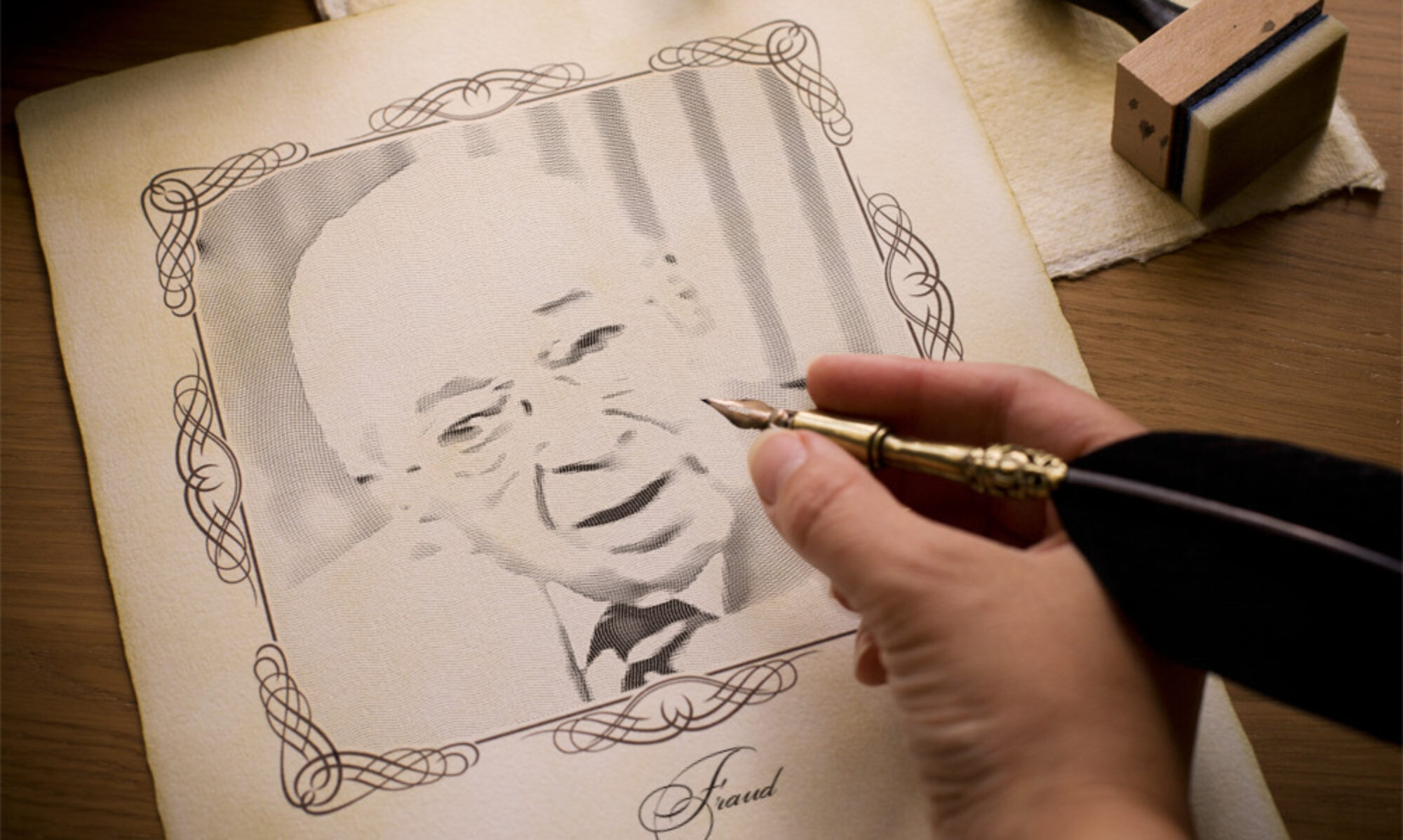
Forty years have passed since Herbert W. Armstrong was laid to rest on January 16, 1986. To his followers, he was the end-time apostle, the voice crying in the wilderness, the man chosen to restore the true gospel before the Great Tribulation. To his critics-and there were many-he was a false prophet whose repeated date-setting, authoritarian control, and personal scandals left a trail of broken lives, emptied bank accounts, and shattered faith.
What follows is not history.
It is not biography.
It is a dark fiction born from the shadows of those real controversies: the unfulfilled prophecies that stretched into decades, the splinter groups that still fight over his legacy, the lingering fear among former members that the teachings they once embraced might one day demand everything again.
In this story, the grave does not hold.
The limousine waits.
The auditorium has been transformed.
And the man who once declared himself God’s final messenger discovers that resurrection is not always salvation.
Sometimes it is judgment.
Sometimes it is simply the next chapter of a nightmare no one saw coming.
Turn the page, if you dare.
The prophecy is about to be fulfilled-
in a way no one ever expected.
Welcome to The Apostle’s Unwanted Resurrection.
On the bone-chilling night of January 16, 2026—forty years to the hour since his last breath-Herbert W. Armstrong erupted from his grave in a shower of wet earth and splintered coffin wood. Decaying fingers, nails blackened and cracked, tore through the sodden soil as his gaunt, white-haired form rose like a vengeful specter.
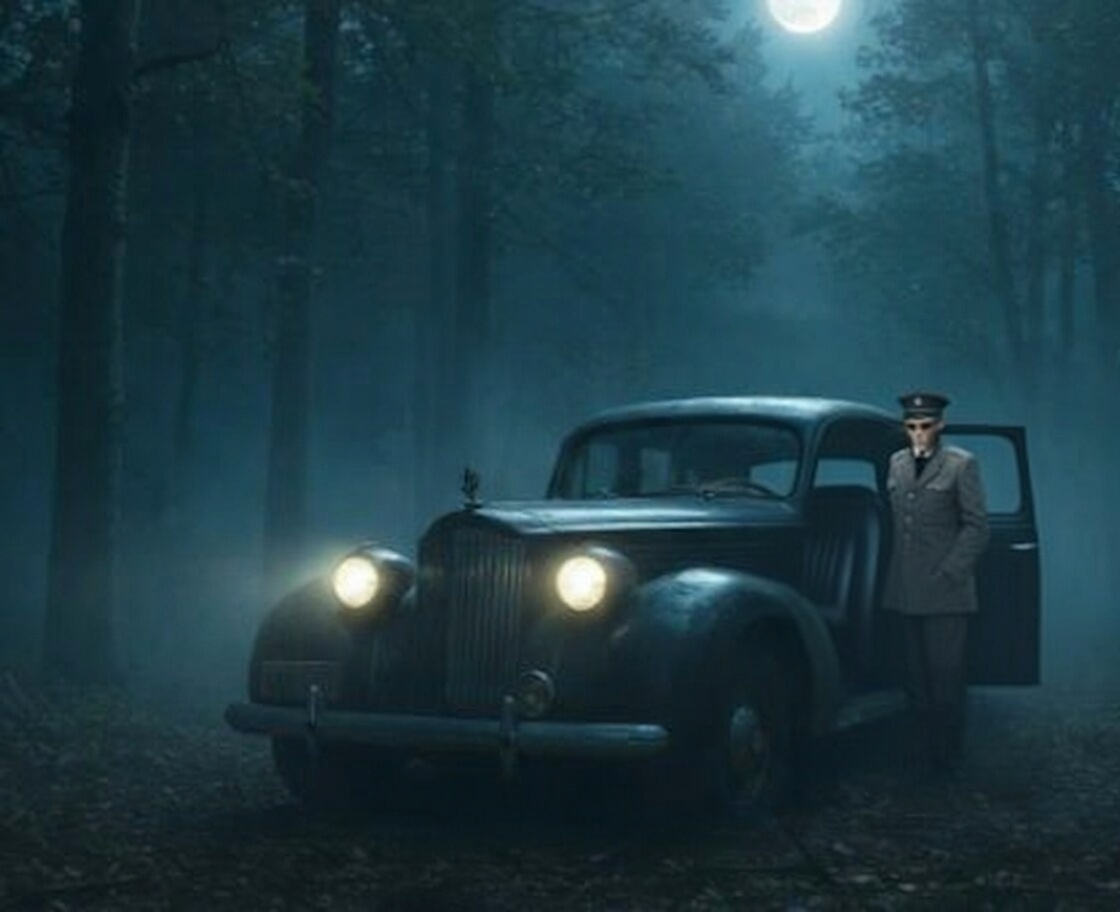
Moonlight gleamed off the pallid skin stretched tight over his skull, his burial suit hanging in filthy rags that clung to withered limbs. He stood swaying, lungs rasping with unnatural air, eyes sunken and wild, as clumps of grave-dirt pattered from his shoulders like dark rain. The cemetery reeked of wet decay and something fouler, something unholy that had waited decades for this moment. At the iron gates, a long black limousine awaited for the arrival of God’s apostle. With a low, oily creak that echoed unnaturally long in the silence, he pulled the rear door open, the sound scraping like fingernails across coffin wood. Then, in a voice that was velvet over broken glass, calm, reverent, and utterly wrong, he spoke the words that chilled even the dead air “We have been awaiting this day for a very long time, Mr. Armstrong.”
Herbie hesitated, then slid inside, his joints popping audibly and muttering something about 40 days and forty nights.
The car pulled away in eerie silence, tires whispering over gravel, carrying the risen prophet back toward the shadowed silhouette of the old Ambassador College campus, where the grand Ambassador Auditorium waited like a desecrated cathedral under a blood-tinged sky. Inside, the once-sacred hall had become a nightmare temple. Hundreds of figures swayed in a suffocating circle, their faces not recognized, rhythmic chants that vibrated throughout the building. At the center of the stage stood a speaker. The congregation turned as one, eyes gleaming with unspeakable horror, and surged backwards, mouths open in ecstatic horror: “Herbert Armstrong has returned!” Armstrong staggered back, mouth agape, the horror finally cracking through his resurrected pride as he realized his legacy had been devoured and reborn as something far darker than even he had ever preached.
As the frenzied congregation surged toward him, clawing hands outstretched and voices rising into a deafening scream, Herbert W. Armstrong felt something he had never truly known in life: raw, animal panic. His resurrected body, still stiff with the chill of the grave, moved on instinct alone. He shoved through the nearest robed figures, their fingers scraping at his tattered sleeves like desperate pilgrims, and bolted for the exit. The doors of the Ambassador Auditorium loomed ahead; he wrenched them open and stumbled out into the cold night air, lungs burning, heart pounding with terror. Behind him, the screams of terror had swelled into a manic roar, but the fog outside swallowed the sound as he staggered down the steps, desperate for escape. He had barely reached the shadowed edge of the parking lot when headlights flared once more, crimson and cruel, the same black limousine that had carried him here now blocking his path.
Gerald Flurry, clad in a crisp dark suit, white hair gleaming under the sodium lights like a crown of frost. His smile was wide, serene, and utterly devoid of warmth. He raised a hand in benediction, stopping Armstrong dead in his tracks. “Mr. Armstrong,” Flurry said, voice calm yet cracking with barely restrained emotion, “there is no running from the prophecy. For forty days is as forty years. Your work is not yet finished. I am going to fly you to Edmond, Oklahoma, tonight. There, is the true headquarters of God’s work. We will complete what you began. The plane is waiting. Come. The brethren have prepared everything for your return.”
Armstrong stared at the man who had once claimed to be his spiritual heir, now gazing at him with the possessive hunger of a collector who had finally reclaimed a long-lost masterpiece. The limousine door yawned open behind him, black as an open grave, its interior lit by a faint, unnatural red glow that pulsed like a heartbeat. more deliberate, as if counting down. Armstrong felt the weight of unseen eyes pressing from every shadow, the fog itself seeming to thicken, to close in. He took one step back, then another, but the driver was already moving-silent, inevitable-guiding him toward the open door with a gentle pressure that brooked no refusal. Flurry’s smile never wavered. And as the door began to close behind him, swallowing the last sliver of moonlight, Armstrong realized-with a clarity sharper than any prophecy he had ever uttered-that this resurrection was not the end of his story.
As the black limousine pulled away from the Ambassador Auditorium, Herbert W. Armstrong, trapped in the back seat, staring out at the receding lights, the screams-carried off on the cold night wind until they were little more than a ghostly echo swallowed by the fog, a promise that tonight’s nightmare was over for Harvest Rock, and a new one was about to begin.
Related: White Noise

